 DoughPrint
How to Make a Bluey & Bingo Cookie Cutter (Without Breaking Copyright)
Your kid wants a Bluey party and you'd love to bake the cookies to match. Good news: you can — and you can do it the right way. The trick isn't tracing a screenshot. It's designing your own little blue-heeler puppy and letting the icing do the rest.
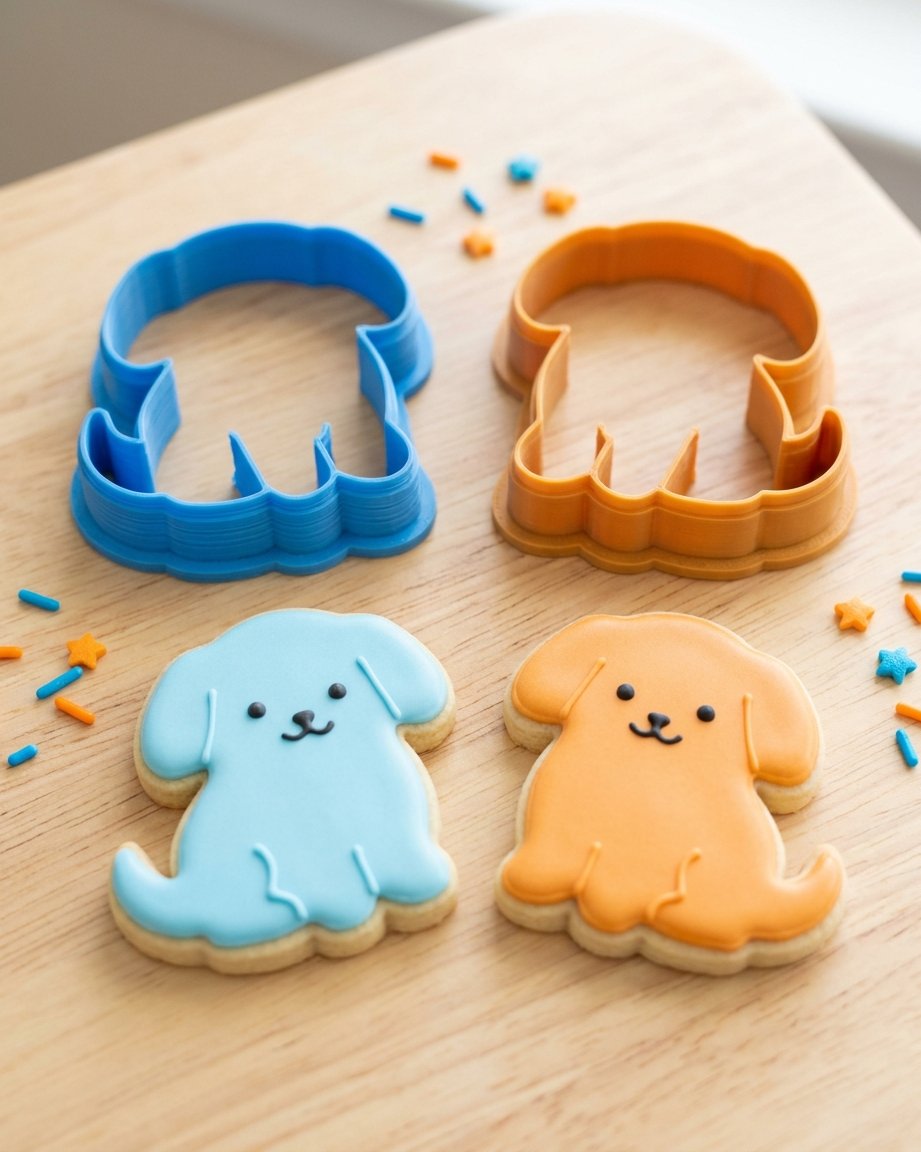
The short answer. You can absolutely make a Bluey-and-Bingo-style cookie cutter for your own child's party. Bluey and Bingo are copyrighted, trademarked characters, so the safe way is to design your own original blue-heeler puppy shape rather than copy the exact character, keep it strictly personal and non-commercial, and never sell the cutter, the cookies, or the file. Do that and the finished cookie still reads as "Bluey" at the party — because the decoration, not the cutter, does the character work.
Let's be honest about why this comes up. A two-tone cartoon puppy is one of the most requested kids-party themes going, and the moment you own a 3D printer someone will ask you for the cutter. The instinct is to grab a screenshot, trace the exact character, and print it. That's the one step worth slowing down on — not because the party police are coming, but because a little care turns a grey-area copy into something that's both safe and, honestly, more fun to make.
First, the copyright bit (read this before you print)
Bluey and Bingo — their names, their exact character designs, and the show's logo — are intellectual property owned by their studio. That protection is real, and it's mostly about commerce: selling, advertising, and passing someone else's brand off as your own. What you do privately in your own kitchen for your own family sits in a very different place. Here's the simple version most home bakers can work from:
| Generally fine (personal, free) | Not okay (copying & selling) |
|---|---|
| Baking themed cookies for your own kid's party | Selling cookies or cutters of the characters |
| Designing your own blue-heeler puppy shape | Tracing the exact official character art or logo |
| Printing that cutter for your family to use | Uploading or selling the design file to others |
| Gifting a few cookies to friends, for free | Using the name "Bluey" to advertise a product |
The pattern is easy to remember: personal and free = fine; copying and money = not. (This is general guidance, not legal advice — if you plan anything commercial, that's a licence conversation with the rights holder.) The rest of this guide lives entirely in the left-hand column, and it's the more satisfying way to do it anyway.
The safe way: design your own puppy
Here's the reframe that makes everything easier. You don't actually need the exact character to throw a great themed party — you need a cookie that reads as the character across a room full of six-year-olds. And that recognition comes overwhelmingly from two colours and two ears, not from a pixel-perfect outline.
So design your own. Draw a simple, rounded cartoon puppy — a heeler or cattle-dog type — as one clean silhouette: a round head, two little rounded-triangle ears, a friendly muzzle. Make one in a "big sibling" size and a slightly smaller one for the little sister, and you've got your own original pair. It's a generic happy dog, which is exactly what keeps you safe — and it took you five minutes.
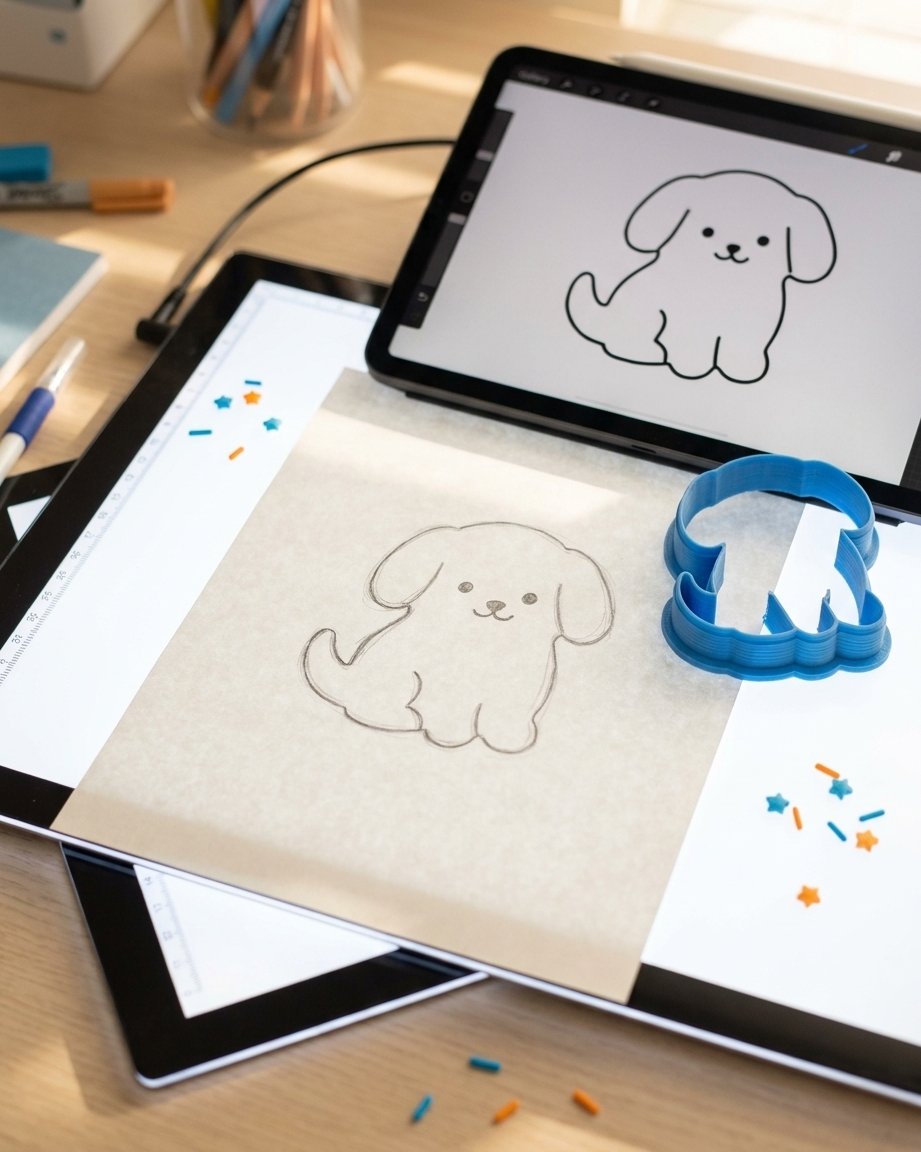
Step by step in DoughPrint
Once you've got a shape in mind, turning it into a printable cutter is the easy part. The full walkthrough lives in our drawing-to-cutter guide, but here's the short version for a puppy:
- Get your shape in. Sketch the puppy on paper and photograph it, or just describe it ("a simple round cartoon puppy head with two ears") and let the AI draw the outline. If your child draws the pup themselves, even better — see turning a kid's drawing into a cutter.
- Clean up the outline. Simplify to one bold, closed silhouette. Round off tiny details that won't survive in dough — a puppy needs to read as chunky and friendly, not fiddly.
- Keep it one connected piece. Ears and muzzle should be fused into the head so the cut cookie lifts out in a single piece. Thin necks and floating spots are what break.
- Size it for little hands. Around 7–9 cm across is the sweet spot: big enough to decorate, small enough for a party plate. Lock your sizing so the big and little pup stay in proportion.
That's it — outline, tidy, size, print. No tracing, no grey area, and a cutter that's genuinely yours.
Let the icing do the character work
This is the part that makes the whole approach click. Your cutter is a plain puppy — but the decorated cookie is unmistakably on-theme, because you've added the signals everyone actually recognises: blue-grey icing on one pup, warm orange on the other, two rounded ears, a cheeky piped face. Put those on a party table with blue and orange balloons and every kid in the room knows exactly what they're looking at.
Decoration is doing the heavy lifting, which is a feature, not a compromise: it's cheaper (one cutter, endless looks), it's more flexible (the same puppy cutter does any two-tone dog theme), and it keeps the printed object itself firmly in the "original shape" column.
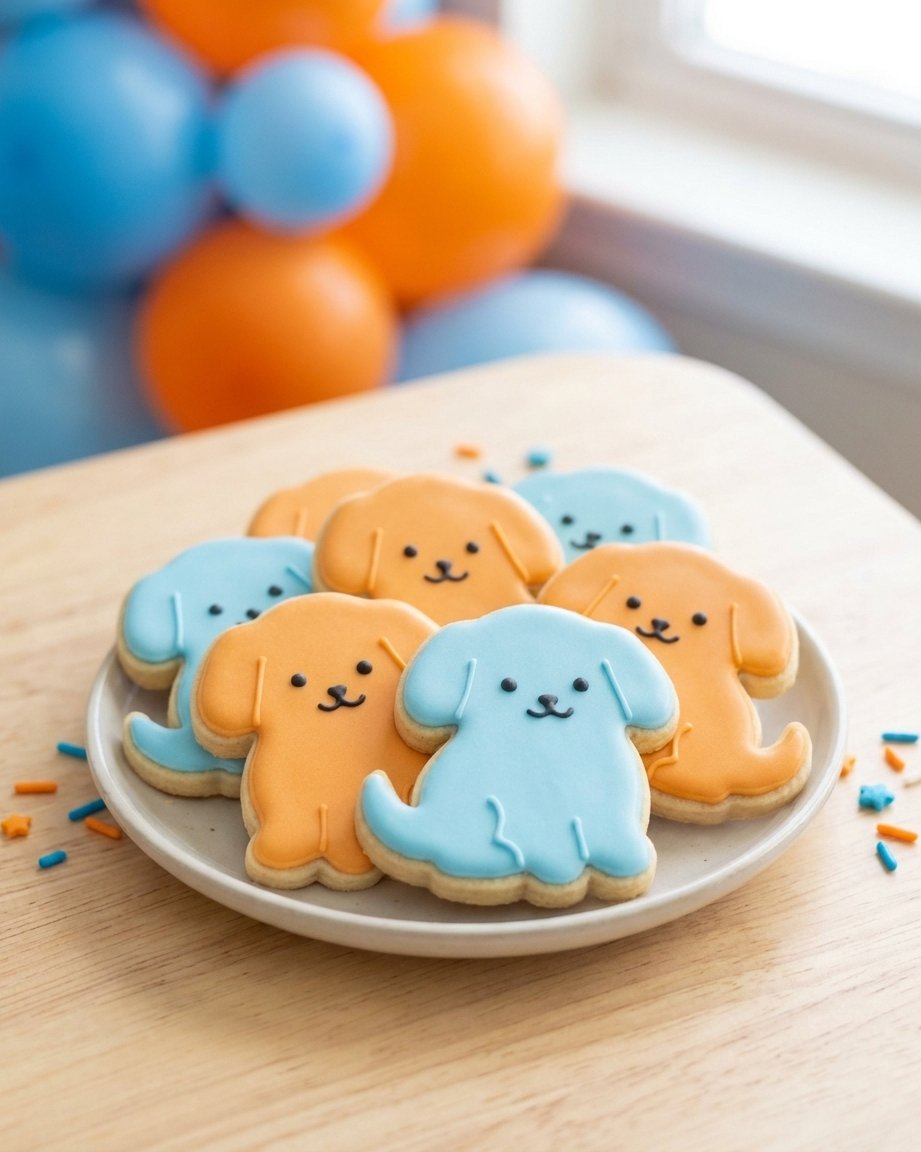
Print & party
Nothing special here beyond the usual cutter advice. Print in PLA for crisp detail and easy colours — blue and orange filament is a nice touch if you want the cutters themselves to match — and follow our print settings guide for clean walls. Because these are going near food, give the food-safety basics a two-minute read: hand-wash cool, dry right away, cold dough only. Then roll, cut, bake, and decorate.
Thinking of selling these? Don't — not the character version. Selling cutters, cookies or files based on Bluey and Bingo needs a licence from the rights holder, and it's exactly the kind of thing studios enforce. If you've caught the cookie-cutter bug and want a shop, design original shapes that are yours to sell — our Etsy guide shows how — and keep the character bakes as free gifts for people you love.
So: yes, you can make the Bluey-and-Bingo cookies your kid is dreaming of. Draw your own cheerful puppy, keep it personal and free, and let two colours and two ears do the rest. It's the safe way, the cheap way, and — once you see the plate come together — the more satisfying one. Open the app and sketch your pup.
Frequently asked questions
Is it legal to make a Bluey cookie cutter at home?
Making a cutter and cookies for your own family's party — where nothing is sold and nothing leaves your kitchen for money — is a very different situation from selling them, and it is what most home bakers do without issue. Bluey and Bingo are copyrighted, trademarked characters owned by their studio, so the safe approach is to design your own original blue-heeler puppy shape rather than copy the exact character art, keep it strictly personal and non-commercial, and never sell the cutter, the cookies or the design file. This article is general guidance, not legal advice.
Can I sell Bluey cookies or cookie cutters?
No — not without a licence from the rights holder. Selling cutters, cookies, or 3D files based on Bluey and Bingo (or using the names and logos to advertise) is commercial use of someone else's protected characters and brand, and studios do enforce this. If you want to sell, design genuinely original shapes that are yours to license, and keep any character-inspired bakes as unpaid gifts for people you know.
How do I make a cutter look like Bluey without copying the character?
Let the decoration do the recognising, not the cutter. Cut a simple, original cartoon-puppy shape, then the blue-grey and orange royal icing, the two rounded ears and the party theme are what make guests read it as the show. The cutter itself stays a generic friendly dog, which is exactly what keeps you on the safe side while the finished cookie still fits the theme.
What shape should I actually draw?
Draw a simple, rounded cartoon puppy — a heeler or cattle-dog type — as a single clean silhouette: a round head with two little triangular-rounded ears, a friendly muzzle, and either just the head or a whole sitting dog. Keep it chunky and connected so the cut cookie stays one piece, and make a second slightly smaller pup if you want a "big and little sibling" pair. You can sketch it by hand or describe it in the app and let the AI outline it.
Do I need a licence for a birthday party?
For a private, non-commercial birthday party at home, people routinely bake themed treats without a licence, and that personal use is not what rights holders pursue. A licence becomes relevant the moment money changes hands — selling the cookies, charging for the cutter, or running a business on the theme. Keep it free and personal and you stay in the clear.
Design your own party puppy
Sketch a cheerful pup, turn it into a clean printable cutter, and bake a plate that's unmistakably on-theme — all your own.
Open the app →