 DoughPrint
Are 3D-Printed Cookie Cutters Food Safe? A Straight Answer
It's the first question every baker asks and the one the internet answers worst — with either a shrug or a scare. Here's the honest version: yes, for what a cutter actually does, if you follow a handful of simple rules.
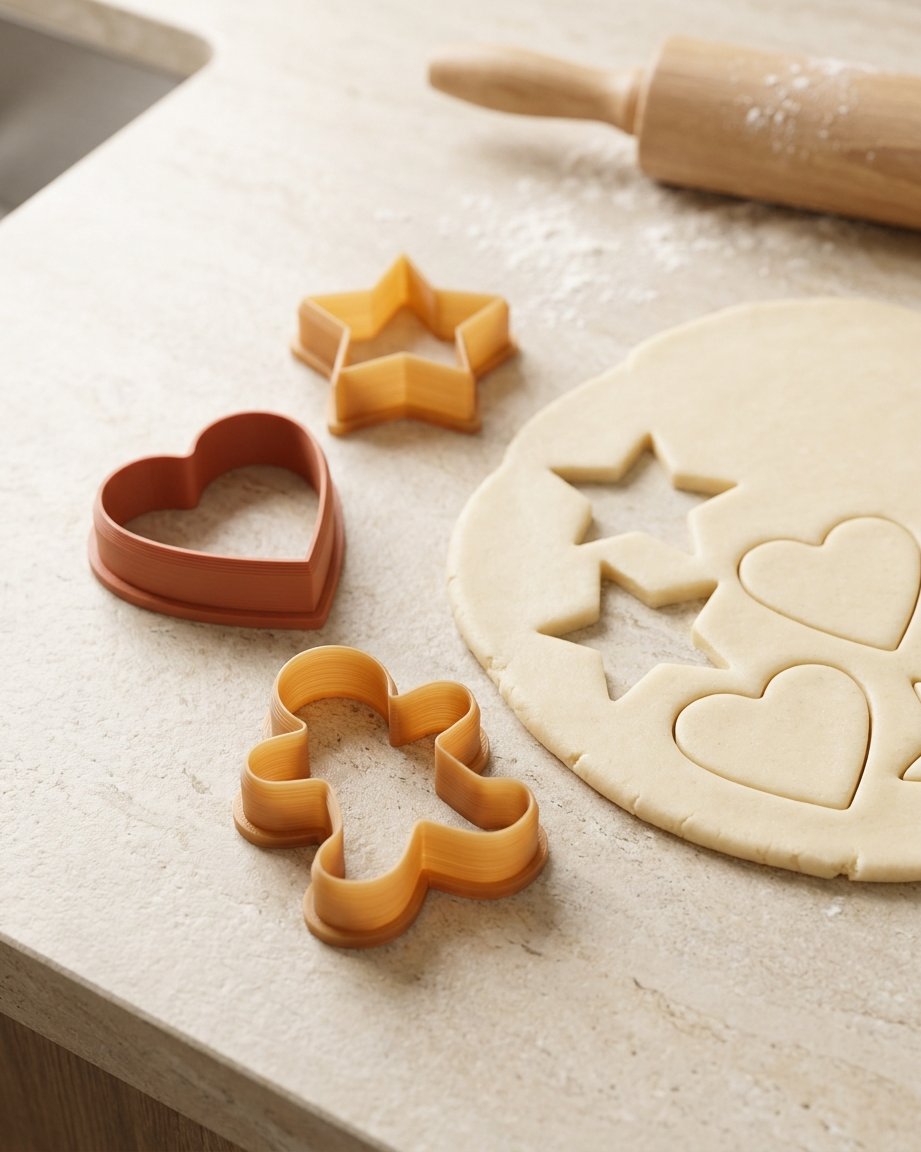
The short answer. A 3D-printed cookie cutter is safe for its real job — briefly cutting cold dough that you then bake — as long as you treat it as a per-project kitchen tool: print it in PLA or PETG, hand-wash it in cool water, dry it right away, and never bake with it, rest hot food on it or run it through the dishwasher. The rest of this guide is why, so you can make the call for your own kitchen.
The reason cookie cutters are one of the safest possible uses for a 3D print is buried in the way you actually use one. The plastic touches raw dough for a few seconds, at room temperature, and then the dough goes into a 180 °C oven that the cutter never sees. Compare that to a printed cup or plate holding hot, wet food for an hour, and you can see why the same material earns very different verdicts depending on the job.
So the useful question isn't "is plastic X food safe?" in the abstract. It's: is this printed object, used this way, safe? For a cutter, two things decide the answer — the material it's made of, and the tiny crevices printing leaves behind.
Concern #1: the plastic
PLA — the default filament for cutters and the one we recommend in our print settings guide — is made from plant starch, and the raw pellets are widely regarded as safe for food contact. But here's the nuance most articles skip: a printed part is not automatically food-grade just because the raw material is. Two things change between pellet and print:
- Colorants and additives. That lovely terracotta or amber comes from pigments and process aids the manufacturer rarely documents for food contact. A natural, uncolored filament — or one explicitly marketed for food-contact use — takes this worry off the table.
- The nozzle. Many printers ship with a brass nozzle, and brass can contain traces of lead. For brief cold contact this is a minor concern, but if you print kitchen tools regularly, a stainless-steel or hardened-steel nozzle removes it entirely.
None of this makes PLA a bad choice — for cutting cold dough it's a genuinely sensible one. It just means "PLA is food safe" is a half-truth worth completing.
Concern #2: the crevices you can't see
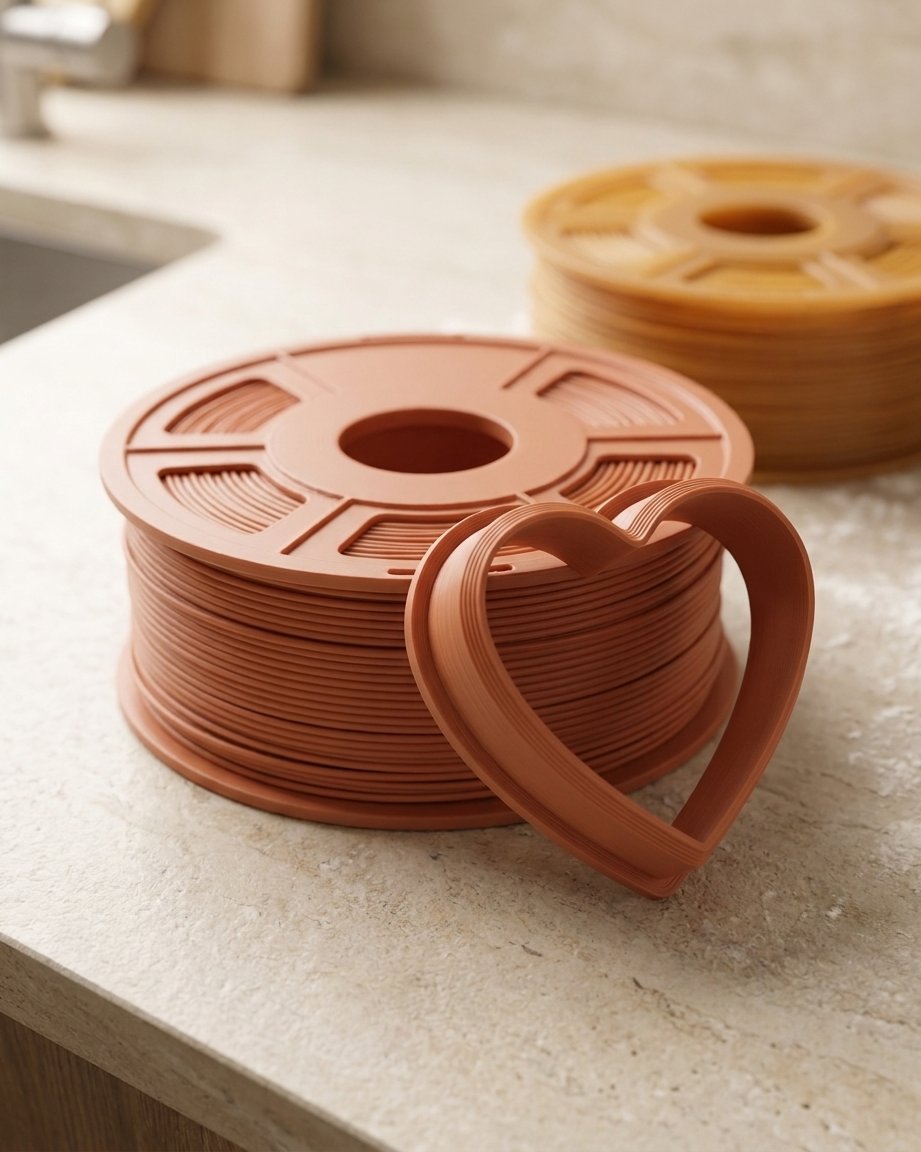
This is the one that actually matters most, and it has nothing to do with which spool you bought. Every 3D print is built in layers, and the fine grooves between those layers are microscopic crevices. They trap dough and moisture, and they're genuinely hard to scrub completely clean. Leave a cutter damp and dirty and those grooves are exactly where bacteria settle in.
That's why the real rule of food-safe 3D printing is hygiene, not just chemistry. A cutter you wash and dry properly after every use is far safer than a "food-grade" one left sticky in a drawer. Treat it like a wooden spoon or a bamboo board: a porous tool that stays safe through care, not one you can sterilise and forget.
The food-safe checklist
Everything above collapses into six habits. Do these and a printed cutter stays perfectly usable:
| Do | Why |
|---|---|
| Print in PLA or PETG | Both are sensible for brief cold contact. Prefer a natural/uncolored or food-oriented filament; PETG if you want a tougher, more heat-tolerant tool. |
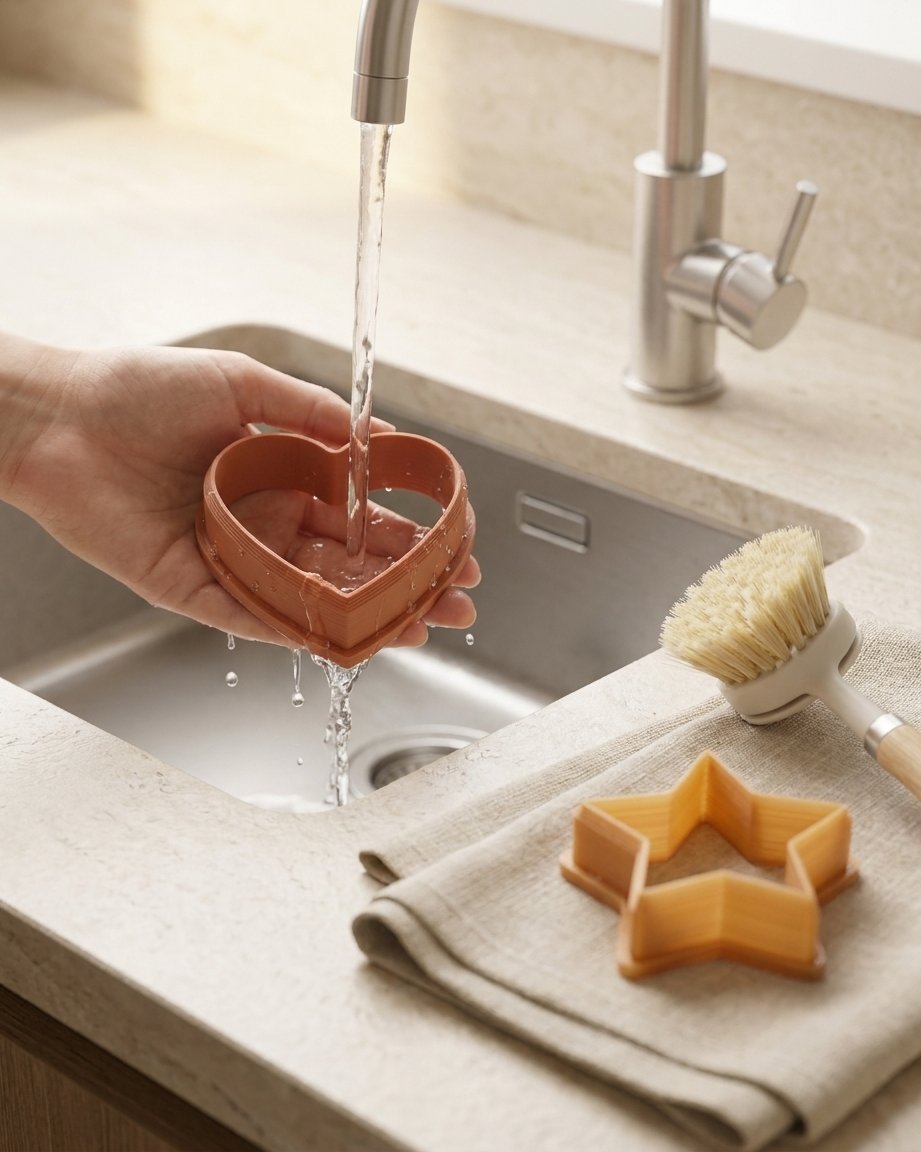
| Hand-wash in cool water | Warm water and PLA don't mix. Cool or lukewarm water with a soft brush lifts dough out of the layer lines without softening the plastic. |
| Dry it immediately | Standing water in the crevices is the actual risk. Pat dry and air out on a towel before it goes away. |
| No dishwasher, no oven | PLA softens around 55–60 °C. A dishwasher warps it; an oven melts it. Always by hand, always cool. |
| Cold dough only, never bake with it | The cutter cuts; the oven bakes. They never meet. Don't use a printed cutter as a mold that goes into heat. |
| Replace when worn | Stained, scratched or fuzzy? Re-printing costs pennies. A fresh cutter beats endlessly deep-cleaning a tired one. |
PLA or PETG — which should you print?
For most bakers PLA is the right default: it prints beautifully, holds crisp detail, and is easy to source in the warm colours a cutter looks good in. Reach for PETG when the cutter will earn its keep — a shape you'll use every week, sell, or want to wash in warmer water.
| PLA | PETG | |
|---|---|---|
| Heat tolerance | Softens ~55–60 °C | Stable to ~70–80 °C |
| Detail & ease | Excellent, very easy to print | Good, a little fussier |
| Durability | Fine for occasional use | Tougher, more flexible |
| Best for | Everyday and seasonal cutters | Heavy use, selling, warmer washing |
Whichever you choose, the six habits above don't change. Material moves the ceiling; hygiene sets the floor.
What about food-safe coatings?
You'll see advice to brush a printed cutter with a food-safe epoxy or coating to fill the layer lines and seal the surface. It's real, and it does smooth things out — but be clear-eyed about it: it's fiddly to apply evenly, it only counts as food safe if the specific product is certified for food contact and fully cured, and it wears with use so it isn't permanent.
For a home baker, the honest cost-benefit usually lands the other way: a printed cutter is cheap and quick to remake. Using it as a clean per-project tool and re-printing when it wears is simpler, safer and less effort than maintaining a coating.
Selling cutters? If you print cutters to sell — see our Etsy guide — pass this on to your buyers. A short care card ("hand-wash cool, dry right away, don't bake or dishwasher") sets expectations, protects your reviews, and is exactly the kind of detail that marks a shop as professional.
Strip away the noise and food-safe 3D printing is mostly common sense: a sensible plastic, a cold and brief job, and a cutter that gets washed and dried like any other kitchen tool. Get those right and every shape you turn from a drawing into a cutter is ready for the dough.
Frequently asked questions
Are 3D-printed cookie cutters food safe?
For their actual job — briefly cutting cold dough that you then bake — a 3D-printed cutter is fine to use, provided you treat it as a per-project tool: print it in PLA or PETG, hand-wash it in cool water, dry it right away, and never bake with it, put hot food on it or run it through the dishwasher. The risk is low because contact is short and cold, and the dough gets baked at high heat afterwards.
Is PLA safe for contact with food?
PLA is made from plant starch and the raw pellets are widely regarded as safe for food contact, but a printed part is not automatically food-grade: the colorants and additives in the filament are often undocumented, and a brass printer nozzle can leave trace metals in the plastic. For brief, cold contact like cutting dough it is a sensible choice — prefer a natural or food-oriented filament and don't rely on it for storing or heating food.
Why do the print layer lines matter for food safety?
The fine grooves between print layers are tiny crevices that trap dough and moisture and are hard to scrub fully clean, so bacteria can grow if the cutter is left wet or dirty. That is why the real rule is hygiene, not just the plastic: hand-wash in cool water right after use, dry the cutter immediately, and replace it once it looks stained or worn rather than deep-cleaning it forever.
Can I put a 3D-printed cookie cutter in the dishwasher or oven?
No. PLA starts to soften around 55–60 °C, so a dishwasher's hot water and drying cycle will warp it, and an oven will melt it outright. Always hand-wash in cool or lukewarm water and let the cutter dry on a towel. If you want something that tolerates hot hand-washing, print in PETG, which stays stable to roughly 70–80 °C.
Should I seal a 3D-printed cutter with a food-safe coating?
You can brush on a food-safe epoxy or coating to fill the layer lines and make the surface smoother, but it is fiddly, it wears over time, and it only counts as food safe if the product is certified for food contact and fully cured. For most home bakers it is easier and cheaper to just print a clean cutter, use it as a per-project tool, and re-print it when it wears out.
Design a cutter worth printing
Turn any drawing into a clean, printable cutter — then print it in PLA and put it to work.
Open the app →